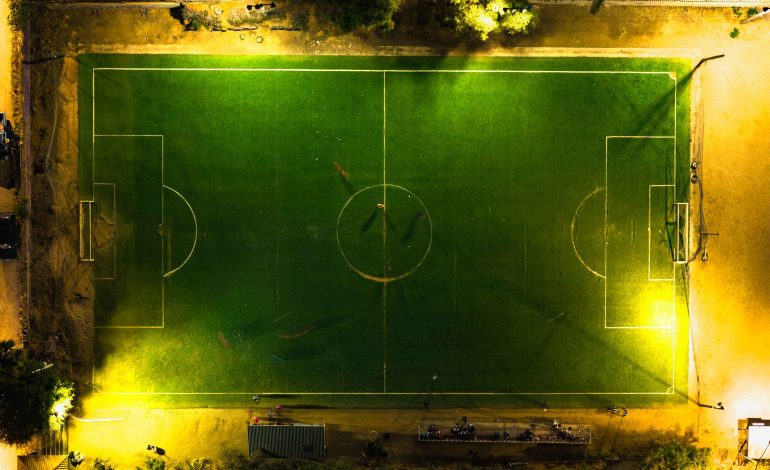
Sports Field Lighting, Drainage, and Fencing: What to Include in Your Project

A sports field is considered good only when it is designed to deliver an ultimate sports experience. The lighting, drainage, and fencing directly affect safety, playability, security, and maintenance. But these systems should not be planned separately.
Lighting poles require foundations and electrical systems, which require accurate grading, pipes, and collection points. However, fencing requires more foundations, gates, and enough clearance for an ultimate maintenance equipment.
If you’re planning a football sports field, training ground, or multi-sport facility, this guide explains what to include in your project scope and how to coordinate the three systems from the start.
Why Lighting, Drainage, and Fencing Matter
A professional sports field needs to perform in different conditions throughout the year.
Sports field lighting extends playing hours and improves visibility. Drainage systems prevent water accumulation and help protect the playing surface. Fencing controls access, improves security, and keeps balls within the designated playing area.
These components also affect the project’s long-term operating costs. Poor drainage can damage the field. Poor lighting can create unsafe dark areas. Inadequate fencing can lead to security and maintenance problems.
That makes early planning essential.
- Plan Sports Field Lighting Around Actual Use
Lighting should be designed according to the sport, field dimensions, and intended level of use.
A training field doesn’t necessarily have the same lighting requirements as a competition venue. Broadcast requirements can also introduce additional considerations, including vertical illumination, color rendering, and flicker. FIFA guidance highlights uniform illumination, glare control, color rendition, and reduced light spill as important floodlighting considerations.
Choose the Right LED Floodlights
LED systems are widely used for modern sports facilities because they can provide controlled, efficient illumination and flexible operating levels.
Your lighting scope should consider:
- LED floodlights suitable for the sport
- Pole height and location
- Beam angles and aiming
- Required illumination levels
- Lighting uniformity
- Electrical cabling and conduits
- Control systems
- Maintenance access
- Glare and light spill
- Weather and environmental protection
Don’t select fixtures based on wattage alone. The complete lighting design should determine whether the field receives appropriate and consistent illumination.
Position Lighting Poles Carefully
Pole locations need to be coordinated with the field layout, fencing, spectator areas, and maintenance routes.
A poorly positioned pole can create glare, shadows, or conflicts with perimeter fencing.
Professional lighting design should model the field before installation and verify illumination during commissioning. Current UAE sports construction guidance also emphasizes measuring lux and uniformity rather than simply relying on fixture specifications.
- Design Drainage Before Installing the Playing Surface
Drainage is one of the most important parts of sports field construction.
Standing water can make a field unusable, damage turf, and weaken underlying layers. The drainage design should therefore begin during site planning rather than after the playing surface has been selected.
Start With Site Levels and Soil Conditions
Before choosing a drainage system, assess:
- Existing ground levels
- Soil permeability
- Natural water flow
- Groundwater conditions
- Local rainfall
- Surrounding runoff
- Available drainage outlets
- Existing stormwater infrastructure
The site assessment helps determine whether surface drainage, subsurface drainage, or a combination is appropriate.
Include Surface Drainage
Surface drainage moves water away from the playing area through carefully designed falls, channels, and collection points.
Depending on the project, this can include:
- Grading and falls
- Perimeter channels
- Drainage gullies
- Catch basins
- Collection pits
- Stormwater pipes
- Approved discharge connections
The objective is simple: move excess water away from the playing surface without creating unsafe slopes or affecting play.
Consider Subsurface Drainage
Subsurface drainage removes water from beneath the field.
For synthetic football fields, for example, drainage can be designed around vertical or horizontal systems depending on the site, materials, and construction approach. FIFA’s football turf guidance recognizes both approaches and emphasizes designing drainage around the rainfall conditions and characteristics of the specific location.
A typical system may include:
- Perforated lateral pipes
- Perimeter collector drains
- Free-draining aggregate
- Geotextile layers
- Drainage channels
- Collection chambers
- Suitable discharge points
The exact specification should be developed by the project engineer based on site conditions.
Planning a sports field project? Get professional guidance on the right combination of lighting, drainage, fencing, and supporting infrastructure for your facility.
- Select Fencing for Safety, Security, and the Sport
Fencing does more than define the field boundary.
It can separate players from spectators, control access, contain balls, and protect surrounding property.
Choose the Correct Fence Type
Your fencing specification should consider the sport, field dimensions, surrounding environment, and security requirements.
Common options include:
- Chain-link fencing
- Welded mesh fencing
- Ball-stop fencing
- High protective netting
- Perimeter security fencing
- Enclosed sports cages
Football and other sports involving high-speed balls may require additional ball-stop fencing behind goals or along selected boundaries.
Plan Gates With the Whole Site
Gates are often overlooked during initial design.
Your project should identify separate access requirements for players, spectators, maintenance teams, and emergency vehicles.
Consider:
- Pedestrian gates
- Wide maintenance gates
- Emergency access
- Locking systems
- Service routes
- Gate swing and clearance
Fencing lines should also be coordinated with lighting poles and drainage infrastructure before foundations are installed.
- Coordinate All Three Systems Before Construction
This is where many sports field projects can go wrong.
Imagine installing drainage pipes first, then discovering that a lighting foundation needs to occupy the same area. Or completing fencing and later having to excavate beside the fence to install electrical ducts.
A coordinated design avoids these conflicts.
Create One Integrated Site Plan
The project plan should show:
- Field orientation and dimensions
- Finished ground levels
- Drainage routes
- Drainage outlets
- Lighting pole locations
- Electrical routes
- Fence lines
- Gate positions
- Irrigation infrastructure
- Maintenance and emergency access
Sports field construction guidance similarly recommends coordinating drainage, field layout, fencing, lighting, and surface systems during the planning stage.
Planning these systems together can reduce rework, excavation and unexpected project costs.
- Account for UAE Sports Field Conditions
Outdoor sports facilities in the UAE face demanding environmental conditions.
High temperatures, strong UV exposure, airborne dust, wind, and short periods of heavy rainfall can all influence material selection and system performance.
Specify Durable Materials
For fencing and external lighting components, consider materials and protective finishes suited to the local environment.
For drainage, the system should be designed around actual site conditions rather than assuming that low annual rainfall means drainage can be minimized. Intense rainfall events can create significant surface runoff in a short period.
This is particularly important for facilities that need to remain operational throughout the year.
- Include Testing and Commissioning
Installation isn’t the final step.
Before handover, each system should be inspected and tested.
Lighting Checks
Verify:
- Illumination levels
- Uniformity
- Light aiming
- Controls
- Electrical connections
- Glare and spill conditions
Sports lighting guidance emphasizes that requirements vary according to sport, facility type, and level of play, so the final criteria should be confirmed against the applicable standards and project requirements.
Drainage Checks
Inspect:
- Pipe connections
- Collection points
- Outfalls
- Drainage flow
- Surface levels
- Potential ponding areas
Fencing Checks
Inspect:
- Post stability
- Mesh tension
- Gates
- Locks
- Sharp edges
- Ball-stop systems
- Protective finishes
Documenting these checks gives the facility owner a clear record for future maintenance.
- Don’t Forget Maintenance Requirements
A sports field should be designed for maintenance, not just opening day.
Lighting poles need safe access for inspection and fixture replacement. Drainage systems need accessible inspection points and cleaning provisions. Fencing needs periodic checks for loose mesh, damaged posts, and gate problems.
Your project scope should therefore include:
- Maintenance access
- Inspection chambers
- Replacement access for lighting
- Drain cleaning provisions
- Equipment access gates
- Maintenance routes
- Warranty documentation
- As-built drawings
This makes future maintenance more predictable and reduces disruption to sports activities.
What Should Your Sports Field Project Include?
Before requesting quotations, make sure the scope covers the complete infrastructure package.
| Project Component | Key Items to Include |
| Lighting | LED floodlights, poles, foundations, electrical systems, controls |
| Drainage | Grading, channels, pipes, collectors, outlets, and inspection points |
| Fencing | Perimeter fencing, ball-stop systems, posts, gates, and access control |
| Coordination | Field layout, utilities, irrigation, access, and maintenance routes |
| Testing | Lighting measurements, drainage checks, and fencing inspection |
| Handover | As-built drawings, warranties, and maintenance documentation |
Build the Infrastructure Into the Design From Day One
Sports field lighting, drainage, and fencing aren’t finishing touches. They’re fundamental parts of a safe, functional, and durable facility.
The three biggest priorities are:
- Design drainage around the real site and rainfall conditions.
- Design lighting for the sport, usage level, and surrounding environment.
- Coordinate fencing, gates, lighting poles, and drainage before construction begins.
For a new sports field or major renovation, professional planning can prevent expensive corrections later.
If you’re developing a sports facility in the UAE, Almustaqbal can help you with sports field construction requirements from planning and groundwork through to the final sports infrastructure installation. Discuss your project requirements with our team to develop a solution suited to your field, site, and intended use.
FAQs
What should be included in sports field lighting?
A sports field lighting package can include LED floodlights, lighting poles, foundations, electrical cabling, control systems, and commissioning. The design should also address illumination levels, uniformity, glare, light spill, and the specific requirements of the sport.
Why is drainage important for a sports field?
Drainage prevents standing water and helps protect the playing surface and underlying construction layers. A properly designed system can improve field availability after rainfall and reduce long-term surface and maintenance problems.
What type of fencing is best for a sports field?
The best fencing depends on the sport and site requirements. Perimeter mesh fencing can provide access control, while taller ball-stop fencing or netting may be needed where fast-moving balls could leave the playing area.
Should lighting, drainage, and fencing be planned together?
Yes. These systems involve overlapping foundations, excavation, access routes, and underground services. Coordinating them during design helps prevent construction conflicts, reduces rework, and creates a more maintainable facility.
Key Takeaways
- Lighting improves field usability, visibility, and safety after dark.
- Drainage protects the playing surface and helps maintain year-round usability.
- Fencing improves security, access control, and ball containment.
- Integrated planning prevents conflicts between electrical, drainage, and structural works.
- Climate-appropriate materials and maintenance access should be included from the beginning.